Programme
- Kian Ravaei - I Will Greet the Sun Again
- Kian Ravaei - Gelevera Deresi
- Kian Ravaei - Gulistan: Part I (Sari Gelin & Wildwood Flower)
Programme Info
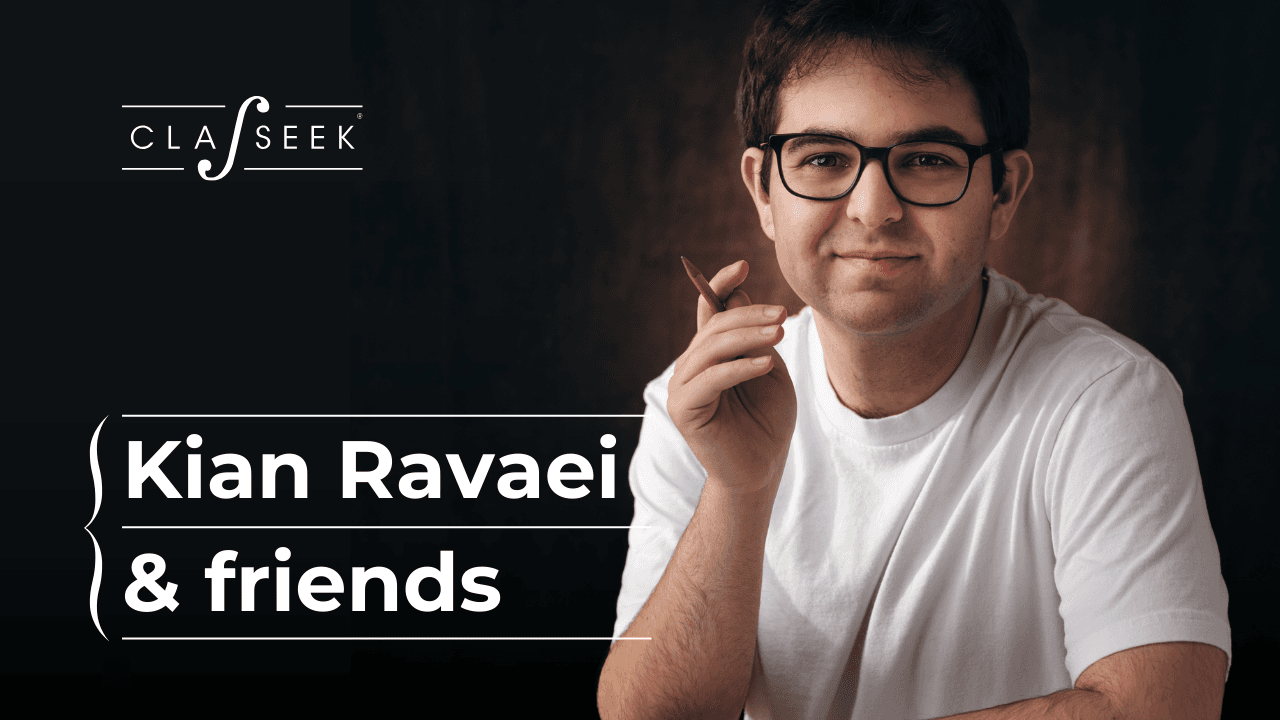
Music as Mosaic: The World of Kian Ravaei
“…notes are a wellspring of humanity and emotion, and I don’t need anything else. The notes are enough for me.”
Composer Kian Ravaei (b.1999) crafts each note from an ‘inner singing’ to express the multitude of colours that describe the human experience. Born to Iranian immigrants, Ravaei, as a Western classical composer, is influenced by traditional and popular Iranian music. He describes his music as a ‘mosaic of [his] favourite musical moments’ melded into his own personal language.
Medieval poet Sa’di Shirazi’s seminal work Gulistan (‘The Rose Garden’ in Persian), written in 1258 CE, reveals a timeless language. It holds a collection of stories, moral anecdotes, and parables — a ‘poetry of ideas’ — and is regarded as one of the most influential works of Persian literature. With perennial reflections on questions of justice, spirituality and social harmony, the flowers of Gulistan represent wisdom.
Part 1 of Ravaei’s Gulistan delicately plucks these flowers and interweaves them with Sari Gelin and Wildwood Flower — traditional Azerbaijani and American folksongs. He creates a dialogue between the helpless longing man of Sari Gelin and the heartbroken woman of Wildwood Flower, demonstrating the universal experience of love and loss.
Gelevera Deresi also draws from a rich well of folksongs, this time from the Black Sea region of Turkey. Ravaei fires ‘melodic shrapnel’ that remind us of the reach of Chernobyl’s devastation, as well as the kemençe, a Turkish spiked fiddle. He reimagines the story of Gelevera Deresi, connecting the tragic love tale to Chernobyl’s destruction.
Ravaei’s reimagination is compelling, as he also offers a new perspective on Ravel’s Shéhérazade in I Will Greet the Sun Again. Setting notes to the revolutionary words of Iranian poet Forouzan Farrokhzad (1934 – 1967), he illustrates Farrokhzad’s writings on female captivity.
To Kian Ravaei, ‘channelling inspiration is synonymous with channelling tradition.’ He expertly creates his own language from the generations of musicians and poets who have come before him.
Programme notes by Malika Jumbe.
Subscribe to Our Newsletter
Get the latest updates from all Classeek activities, events, and more - delivered straight to your inbox!