Programme
- J. Haydn - Divertimento in D Major
- D. Shostakovich - Cello Sonata in D minor, Op. 40 Movements I and II
Programme Info
Playfulness and Passion: Haydn and Shostakovich through Tsai’s bow
“…I’ve found it helpful to find a tonic note and survey all of its arpeggios with their inversions.”
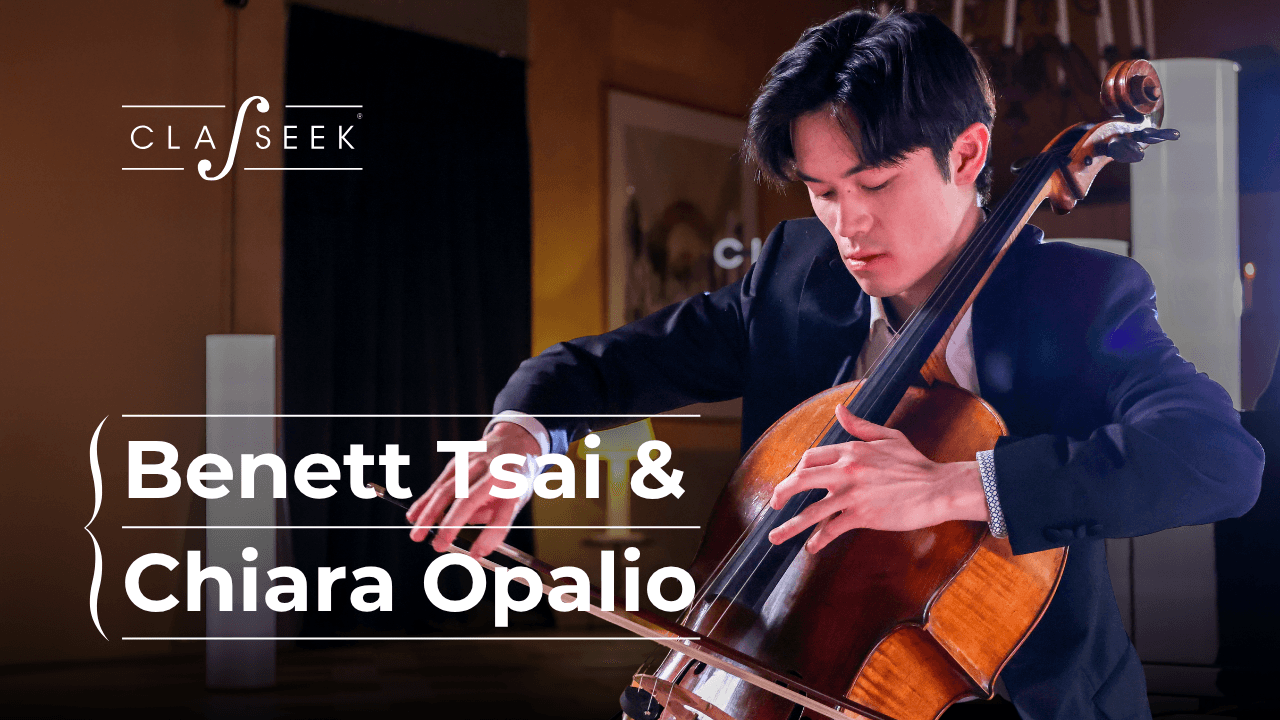
Australian cellist Benett Tsai was referring to his chosen warm-up routine, and his holistic yet detailed approach resounds in his charismatic performances. Born and raised in Sydney, Tsai masters his 1719 Giuseppe Guarneri cello to “illuminate the individuality” of each composer, with their “distinct ideas, emotions, and personalities.”
Joseph Haydn’s playful wit is well-documented. From the refined slapstick humour of a very abrupt forte in the slow movement of his “Surprise” Symphony, to the subtly irreverent dismissal of musicians during his “Farewell” Symphony, Haydn’s charm shines throughout his works.
Divertimento in D Major holds a sparkling lightness and genteel humour that fulfils its namesake — it diverts and entertains. As a court composer under Prince Nikolaus Esterházy in the late 1760s, Haydn composed several baryton trios (for baryton, viola and cello) from which this Divertimento belongs. Its continued arrangements into the 20th century attest to Haydn’s personable writing. Gregor Piatigorsky’s 1944 ‘transcription’ rearranges the order of the movements, dropping the finale and introducing new ornamentations. The Divertimento begins with a slow and expressive Adagio demanding utmost sensitivity. The second movement then graciously ups the tempo with a refined Menuet. It closes with an Allegro di molto, a lively dance with dexterous lightness.
While Dimitri Shostakovich’s writing could certainly be described as dexterous, lightness does not come to mind. Born in St. Petersburg in 1906, he described life under Stalin’s regime as “unbelievably mean and hard. Every day brought more bad news and I felt so much pain. I was so lonely and afraid.” His Cello Sonata in D minor, Op. 40 blends emotional complexity with technical virtuosity, standing alone as his only sonata for cello and piano. Dedicated to cellist Victor Kubatsky, Shostakovich expresses an overwhelming romance in the opening Allegro non troppo that sings introspective themes peppered with anxious pizzicatos. The Allegro second movement contrasts with its rhythmic march-like energy that playfully disquiets, thanks to the irony and tension that is laced throughout.
Programme notes by Malika Jumbe.
Subscribe to Our Newsletter
Get the latest updates from all Classeek activities, events, and more - delivered straight to your inbox!


