Programme
- L. Berio - Wasserklavier
- F. Chopin - Impromptu in F Sharp Major, Op. 36
- J. Bach - Nun freut euch, lieben Christen
- F. Chopin - Ballade No. 3
Programme Info
Sing
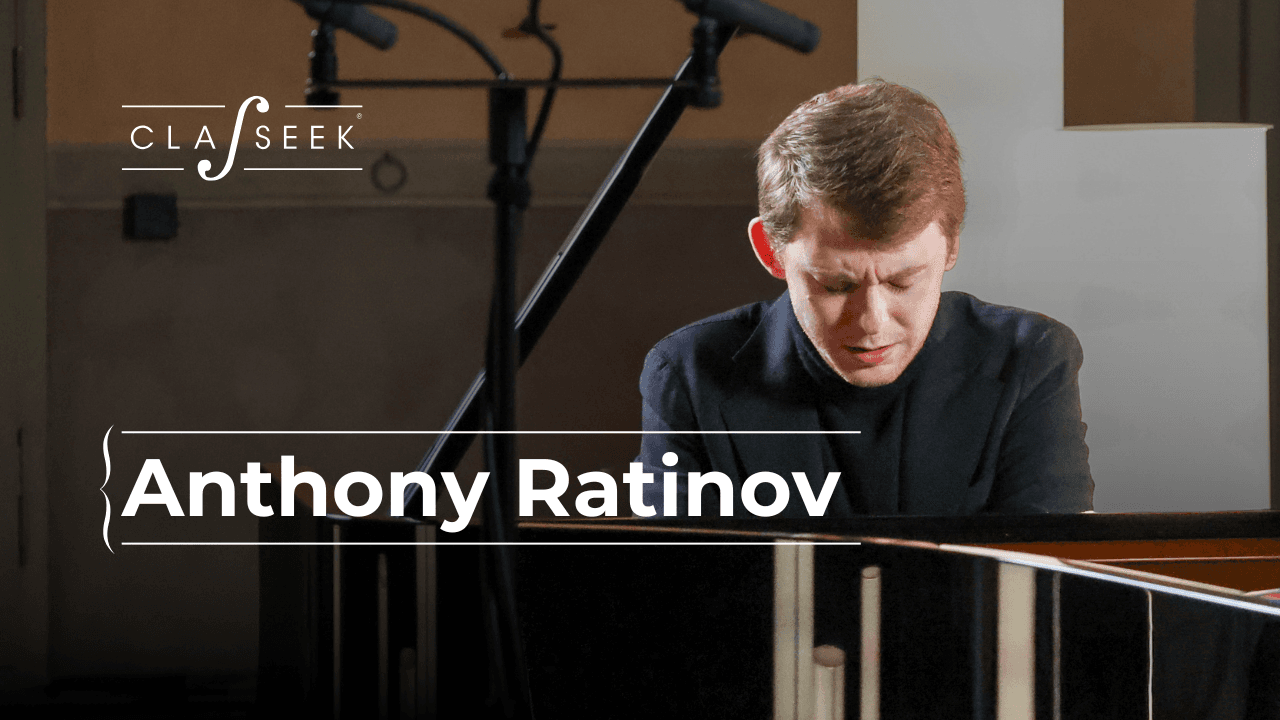
Anthony Ratinov’s rigorous piano training began at the age of three, singing and twirling to Chopin waltzes his grandmother played. A piano teacher for over fifty years, Edit Ratinova moved from Moscow to Indiana to teach Ratinov the essence of pianism: singing. Time and again, she reminded him that the pianist’s most important task is to make the instrument sing, shaping each phrase with the delicacy of the human voice.
This philosophy has distinguished Ratinov throughout his career, recently winning the 2026 ICMA-Classeek Award. In his own words, he finds his “most powerful voice on stage with a piano”, where he can “show the audience who [he] is and really connect with people.” Beginning with Luciano Berio’s Wasserklavier, Ratinov sings through the piano in a programme that reflects the musical influences that have shaped his artistic voice.
Wasserklavier (Water Piano) is the first of six short pieces composed between 1965 and 1990 by Italian composer Luciano Berio. Its nostalgic idiom begins teneramente e lontano (gently, as from a distance), sempre legatissimo (always very legato), and leaves us with an open, unanswered question.
Nostalgia is enigmatically transformed in Frédéric Chopin’s Impromptu in F-Sharp Major, Op. 36, where a nocturnal melody emerges in the right hand after a gentle opening. Composed in 1839, two years after Chopin’s first impromptu, its opening air of suspended wonder gives way to an intense military section. It then returns to a prayer-like chorale, bringing the work to a resolute close.
Renowned for his chorales, Johann Sebastian Bach’s Nun freut euch, lieben Christen is one of his most joyful chorale preludes. Translating as, “Dear Christians, One and All, Rejoice,” the work bursts with exuberance from beginning to end. Based on a hymn by Martin Luther, Bach’s perpetuum mobile imbues Nun freut euch, lieben Christen with extraordinary vitality and virtuosic brilliance.
Chopin’s Ballade No. 3 in A-flat Major brings the programme to a virtuosic close. Once nicknamed Undine after Adam Mickiewicz’s poem, the work combines brilliance with lyricism in equal measure. Here, the piano sings one final time.
Programme notes by Malika Jumbe.
Subscribe to Our Newsletter
Get the latest updates from all Classeek activities, events, and more - delivered straight to your inbox!


